
7. The New Bargain: DTC Brands + Brick & Mortar Retail
Summary
Mark and Mike discuss the tumultuous history between Direct-to-Consumer mattress brands and Brick & Mortar stores, the factors that led to their ultimate reconciliation, and the intricate dynamics of these relationships today.
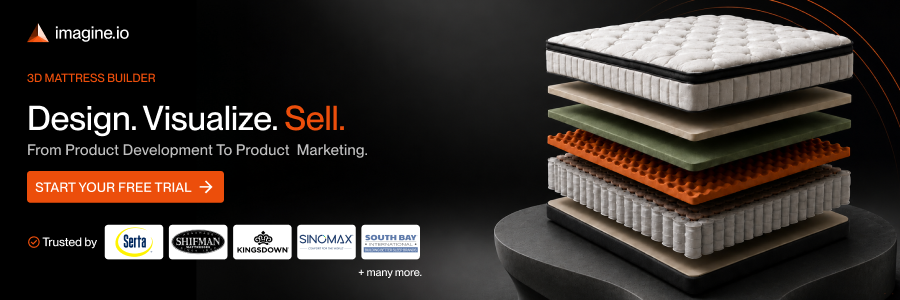
Click here to check out the Imagine.io Mattress Builder mentioned in this episode!
Key Take-Aways
Selling direct is no longer the debate. A decade ago, retailers refused to carry DTC brands, and threatened to cut off any manufacturers who sold direct. Today that fight is over — the conversation has shifted entirely to how brands and retailers behave in a world where most brands sell direct.
DTC brands may not have set out to be in brick & mortar stores, but the successful ones ultimately needed to be there. Once the pool of consumers willing to buy a mattress sight-unseen has been exhausted, continued growth requires expanding into the segment of shoppers who want to try before they buy.
Higher margins from direct sales fund more aggressive advertising. Brands like Nectar proved that this margin can be successfully reinvested into ad spend as high as 30% of revenue.
The modern marketing blueprint is built on lower-funnel dominance. Rather than chase broad brand awareness, Nectar spent aggressively to target people already shopping for a mattress — dominating the affiliate channel, bidding up retargeting audiences, and optimizing based on conversions. Brands that didn’t develop this ROI-driven advertising muscle squandered massive leads.
Every major DTC brand took a genuinely different path to scale. Tuft & Needle built credibility through Amazon reviews, Casper won the earned media battle, Purple went viral with entertaining videos, and Nectar out-executed on paid lower-funnel spend — there was no single DTC success blueprint.
Tempur-Pedic wrote the brick & mortar expansion playbook. Long before any of the modern DTC mattress brands, Tempur-Pedic generated enormous demand through massive spending on late-night infomercials. When they hit a ceiling on phone-only sales, they expanded distribution into malls and eventually traditional mattress and furniture retailers — a pattern the DTC generation was destined to repeat 10+ years later.
Selling direct makes brands smarter, not just richer. Manufacturers who sell direct get real-time visibility into what messaging and product features actually convert, instead of relying on a "telephone game" filtered through retail sales associates, sales managers, field reps, and the like.
Most major DTC brands now manufacture their own beds. Early on, almost every DTC mattress brand outsourced the production of their mattresses. Today, consolidation has closed much of the cost-structure gap between DTC and legacy brands, affording most major DTC brands the ability to make their own beds, including Casper/Carpenter, Nectar/Ashley, Saatva/BIA, and 3Z’s portfolio of brands.
Retailers now expect brands to bring the traffic. A decade ago, driving store traffic was seen as the retailer's job. Today, it's often the single most important thing a retailer wants from a brand partner.
DTC have emerged from the back of the store. When DTC products first landed on showroom floors, retailers treated them as low-margin traffic bait, burying them in back rooms and pushing customers toward higher-commission alternatives instead. Today’s DTC products fare better on a showroom floor, and the DTC brands have higher expectations from their dealers accordingly.
A rising tension at retail is who "owns" the customer once they enter the store. DTC brands have historically owned their customers all the way through conversion, while retail stores typically own any customer that walks through their doors. Retailers are pushing back on DTC brands who continue marketing to shoppers after they are physically in the store.
A store’s leverage to keep DTC marketing out of their stores depends on their conversion rate. If a DTC brand sees that the store traffic it sends is reliably converted to in-store sales of their products, they’ll be much more willing to stay hands-off in marketing to those customers.
DTC and brick & mortar now compete for the same ad dollars. When brands and their own retail partners bid on the same keywords, customer acquisition costs get driven up for both sides — a hidden cost of the new bargain.
Willingness to buy sight-unseen and willingness to spend have converged. GoodBed data shows that shoppers who don't need to try a mattress in-store used to have lower budgets than those who did — that gap has now closed, signaling the DTC model is no longer a discount-only proposition.
Show Notes
Shout-outs (in no particular order): Nectar, Casper, Purple, BedinaBox, Tuft & Needle, Tempur-Pedic, Michael Fux (Sleep Innovations), Saatva, Helix / 3Z.
Clarification: The “OG” of the DTC compressed mattress game is indeed BedinaBox — who started compressing mattresses in 2006, and to our knowledge developed the first machine to do so. This was discussed at ~6:09 in the video, but was framed somewhat ambiguously, so we wanted to add a note here to clarify the FACTS.